The Best and Worst of Living in Hawaii
By Tony Kawaguchi, REALTOR (RS-66616), The Kawaguchi Group, eXp Realty (RB-21841). Updated November 13, 2026.
Living in Hawaii for most mainlanders is kind of like living in a different country. In some ways it's wonderful, and in other ways it's terrible. Owning a home in Hawaii is like a dream for many, but like any other place on earth, Hawaii isn't perfect. We call it paradise, but that's really more about the land, ocean, and the beauty of nature in our tropical climate.
If you're thinking about buying Hawaii real estate, then you've come to the right place. I won't pretend it's going to be all sunny days and perfect waves, but I can help you understand where the best places to invest are on Oahu, and how to research any neighborhood for yourself. Some parts of Oahu appreciate in price faster than others. You need to understand that Hawaii is still the real world, but maybe one of the best parts of the world.
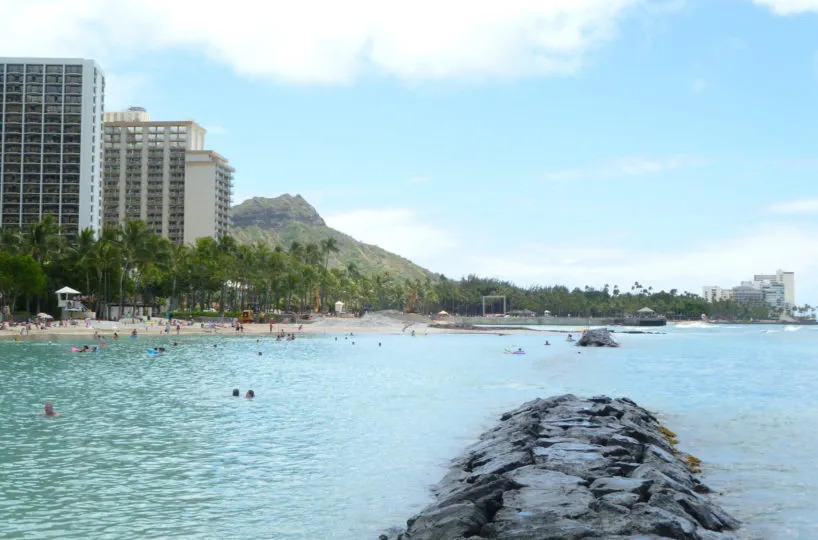 Ala Moana Beach Park
Here are the Best Things about Living in Hawaii
The ocean is everywhere, and we get in it a lot. Scuba, snorkel, surf, spearfish, water ski, you name it, we do it. And the water is about 75 degrees all year long. The best beaches are on the north shore at Sunset beach and Waimea, but those beaches have giant waves in the winter, so when the surf is big and you just want to go to a beach without waves, go to Kailua or Lanikai. The white sand is beautiful.
Even if you never surf, you can paddle on a kayak or a canoe, get in a boat, swim, or just sit on the beach. People save their money for years to come sit on our beaches for a week. We work all week and enjoy the beach in the afternoons. Our family does in fact go the beach almost everyday - at least the surfers in our family do.
The surf. Most of Hawaii's surf is on the north shore, but the south side has Ala Moana, Kewalo's, and a bunch of spots I won't mention, because we like to keep the crowds down. Oahu has the best surf in the world at Pipeline, Off the Wall, and Waimea bay. Even if you're not into the surf, you will still enjoy those beaches with their wide clean sand, and calm water in the summer.
The mountains on Oahu are beautiful and fun to hike. The Koolau Mountain Range is truly beautiful and has been featured in many movies and print ads. From Kailua, you get an amazing view of the Koolaus just about all the time. There are other areas to hike, but Kailua is a favorite. If you go to the North Shore, you can hike Pupukea, and on the South side, you can hike Makapuu or Diamond Head. Hikers love Oahu for its dozens of lesser know trails. Please stay on marked trails - hikers get lost when they don't, and sometimes get really hurt or lost.
The Aloha. Hard to describe, but it's the lifestyle, the friendliness, the kindness that Hawaii residents show to each other (usually.) People are generally nicer, though it might take longer to get close.
The pace. Life in Hawaii is slower than the mainland, though Oahu has a faster pace than neighboring islands, and downtown Honolulu has about the same energy as any other big city.
Hawaii is warm. All winter it's about 70-80 degrees, and mostly sunny. I never need a jacket, and you can be outside almost every single day.
It's a tropical paradise, but it's still America, so you have most of the creature comforts.
Now, the worst things about living in Hawaii: 
The pace of life in Hawaii is slower. Sometimes it's a little too slow and it gets to mainlanders. However, the pace in downtown Honolulu is a lot faster than in areas like Haleiwa or Kailua. You'll find that you can have whatever pace you like, depending on where you choose to buy real estate on Oahu. That's why it's important to have someone with local knowledge to help you choose the right neighborhood for you.
The beaurocracy. The government seems to have a very slow hand in a lot things. For instance, there is only one place on the island you can get a driver's license transferred from out of state, and the line is usually 3 hours long. If you're building a new house or adding on, you might have to drive all over Oahu to get your building permits.
Oahu is kind of small. Some people start to get rock fever after a couple years. If you get off the island a couple times a year, that helps a lot, but if you sit in Kailua and never even drive over to town, you could go crazy. I recommend driving around the entire island every now and then, because it will show you how big it really is. Oahu is a lot bigger than most towns located on the mainland.
Sometimes it's hard to get things because Oahu is an island. Shipping things here from the mainland costs more money than you may be used to paying. Fortunately we have Costco, Walmart, Target, Sam's Club, Best Buy, and just about every big mainland chain store you can think of.
Its far. Everything is farther from the most remote island chain on Earth. To get anywhere from Hawaii, you probably can't get a direct flight, except to major cities like LA, Houston, NY, Tokyo, or Sydney. If you need to get to Bozeman Montana, where my in-laws live, you will have to take at least 3 flights. Europe might be 4 flights, depending on the country. We once flew from Honolulu to New York, then to London, then to Spain. It took about 3000 hours of travel to reach Spain. When we got there, Spain was closed.
We have more mold, rust, mildew, oxidation, dry rot, termites, and cockroaches. We have more of these things, because the wind is always blowing the salty sea air into your house, and bugs love tropical climates. One thing though that you'll hardly ever see here is mosquitoes. We have surprisingly few of them.
Rain. Sometimes it will start raining for a few minutes on a very sunny day, while other times there are sunny breaks between downpours. There is less rain in Kapolei and Ewa beach, and more rain in Kailua and Kaneohe. The most rain on the island is right in Manoa valley.
It's hot. No it's not Africa hot, or even Florida hot, but it's hot. I said it's warm above, but if you like cool weather like I do, sometimes the hottest months like August through October are tough. But that's why we have AC, and at night it's almost always very pleasant.
The Cost. Everything costs more. Overall prices run about 10% above the U.S. average, and anything heavy costs more to ship here. Houses are expensive, of course. The numbers are below.
I'm sure I could keep going, but you get the idea. It's wonderful in some ways, and difficult in others. The things you deal with to live in paradise are fine for most, but too much for others. My bike is rusted, but hey, I live in Hawaii!
Contact AlohaTony for personalized assistance, or browse our Hawaii MLS listings to see all available properties.
Hawaii by the numbers (late 2026)
Here are the numbers behind "everything costs more," all from primary sources:
- Overall prices: Hawaii's price level is 110.0, compared with a U.S. average of 100.0 (U.S. Bureau of Economic Analysis, Regional Price Parities, 2024 data, released February 19, 2026).
- Homes: The Oahu median for October 2026 was $1,150,000 for single-family homes and $499,000 for condos (Honolulu Board of REALTORS, released November 6, 2026). Half of October condo sales closed under $500,000.
- Electricity: Hawaii's average residential rate was 48.00 cents per kWh, compared with 18.31 cents nationally (U.S. Energy Information Administration, July 2026 data). A typical 500 kWh Oahu bill was $246.44 (Hawaiian Electric, October 1, 2026).
- Gasoline: Regular averaged $5.63 a gallon in Hawaii, compared with $4.26 nationally (AAA, October 21, 2026).
- Rent: HUD's fiscal 2027 Fair Market Rent for a two-bedroom in urban Honolulu is $2,542 a month, including utilities (effective October 1, 2026).
For the full breakdown, read our Hawaii cost of living guide. For home prices by area, see the Oahu market report and our Oahu real estate market guide.
How to get more of the best and less of the worst
- Pick your side of the island on purpose. Weather, pace and commute change a lot from Kailua to Kapolei to Haleiwa. Our Oahu neighborhood guides and which island should I live on guide can help you narrow it down.
- Plan your commute before you pick a home. The H-1 at rush hour is the biggest daily frustration for many people. Living close to work, or near a Skyline station or a good bus line, makes a big difference.
- Budget for electricity and maintenance. Solar panels, efficient AC and regular termite and rust prevention save money over time. In older homes and condos, ask about termite treatment history and the age of the roof.
- Get off the rock once in a while. Neighbor-island trips are short flights, and they help a lot with island fever.
- Do the paperwork early. Pets, vehicle registration and driver's license transfers all take more steps in Hawaii. Our moving to Hawaii guide and Hawaii relocation guide walk through them, and our PCS to Hawaii guide covers military moves.
Sources: U.S. Bureau of Economic Analysis; Honolulu Board of REALTORS (hicentral.com); U.S. Energy Information Administration; Hawaiian Electric; AAA; U.S. Department of Housing and Urban Development. Dates are shown with each figure.
Living in Hawaii FAQ
What are the best things about living in Hawaii?
Most people point to the ocean, the warm weather all year, hiking in the mountains, the slower pace and the aloha spirit. You can be outside almost every day of the year.
What are the worst things about living in Hawaii?
The high cost of living, distance from the mainland, island fever, slow government processes, humidity, termites and rust, and the hot months from August through October.
How expensive is it to live in Hawaii?
The U.S. Bureau of Economic Analysis puts Hawaii's overall price level at 110.0, compared with a U.S. average of 100.0 (2024 data). Housing and electricity are the biggest gaps. In October 2026, the Oahu median was $1,150,000 for single-family homes and $499,000 for condos, according to the Honolulu Board of REALTORS.
Why is electricity so expensive in Hawaii?
Oahu still burns a lot of imported oil to make power. Hawaii's average residential rate was 48.00 cents per kWh, compared with 18.31 cents nationally (EIA, July 2026 data). Many homeowners add solar to cut their bills.
What is island fever?
Island fever is the boxed-in feeling some people get after living on an island for a while. Exploring the whole island, taking neighbor-island trips and traveling to the mainland now and then all help.
Which part of Oahu gets the least rain?
The leeward and Ewa side, including Kapolei and Ewa Beach, is generally drier. Windward areas like Kailua and Kaneohe, and valleys like Manoa, get much more rain.
Is it hard to move to Hawaii from the mainland?
It takes more planning than a move between states on the mainland, because of shipping costs, pet import rules, car shipping and vehicle registration. A good plan and a local agent make it much easier.
To talk through where you'd fit best on Oahu, call (808) 201-3577.
Tony Kawaguchi, REALTOR (RS-66616), The Kawaguchi Group, eXp Realty (RB-21841).